
#104 Ruby Guitar Amp
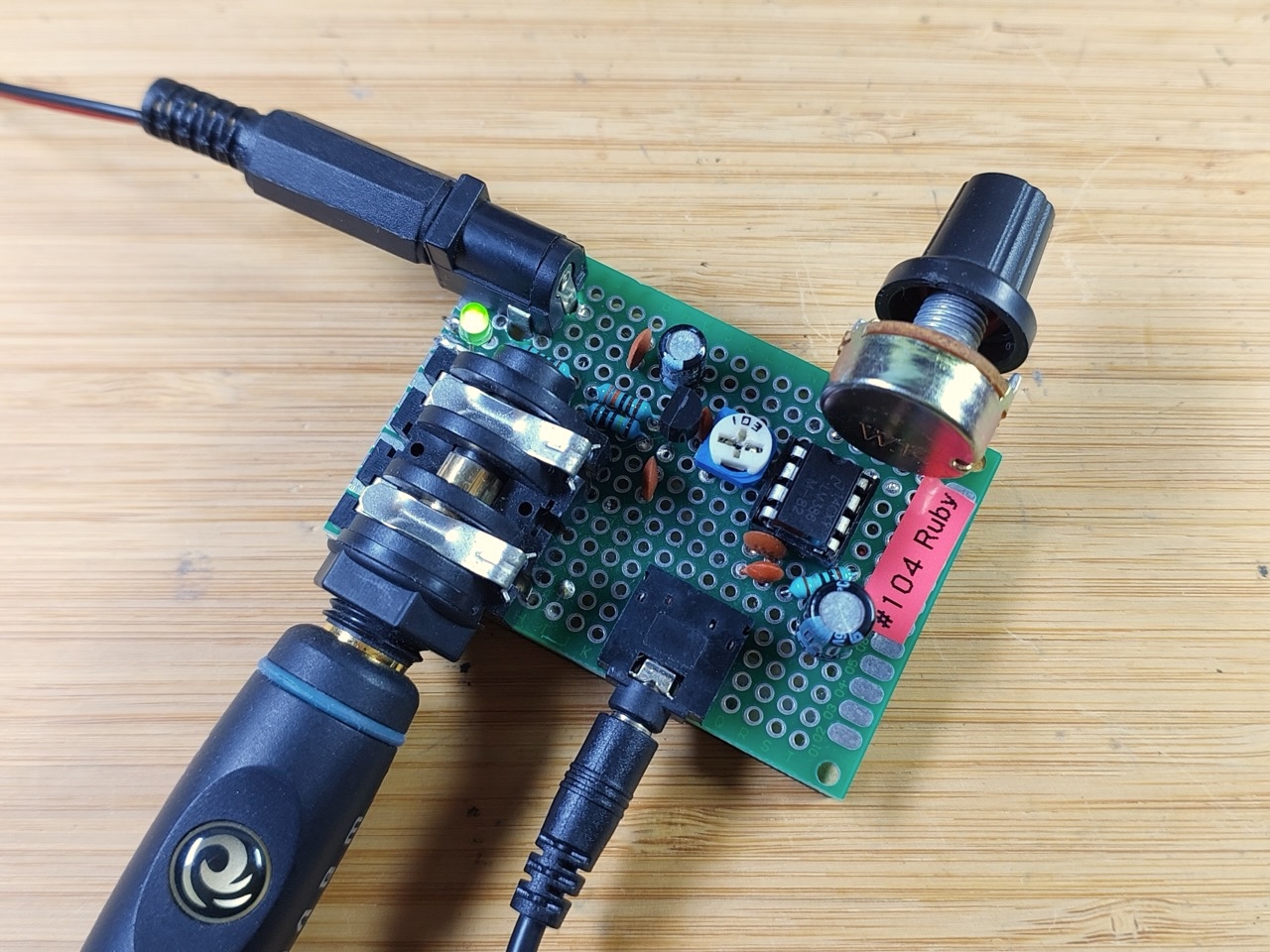
A version of the runoffgroove Ruby LM386 guitar amp.
Notes
The Ruby amp is similar to the * LEAP#095 Little Gem, however it introduces a JFET buffer on the input and discrete volume and gain controls for the LM386.
The build here is based on the runoffgroove schematic, but with a few variations:
- adds a coupling capacitor on the input
- J201 n-channel JFET instead of the original MPF102
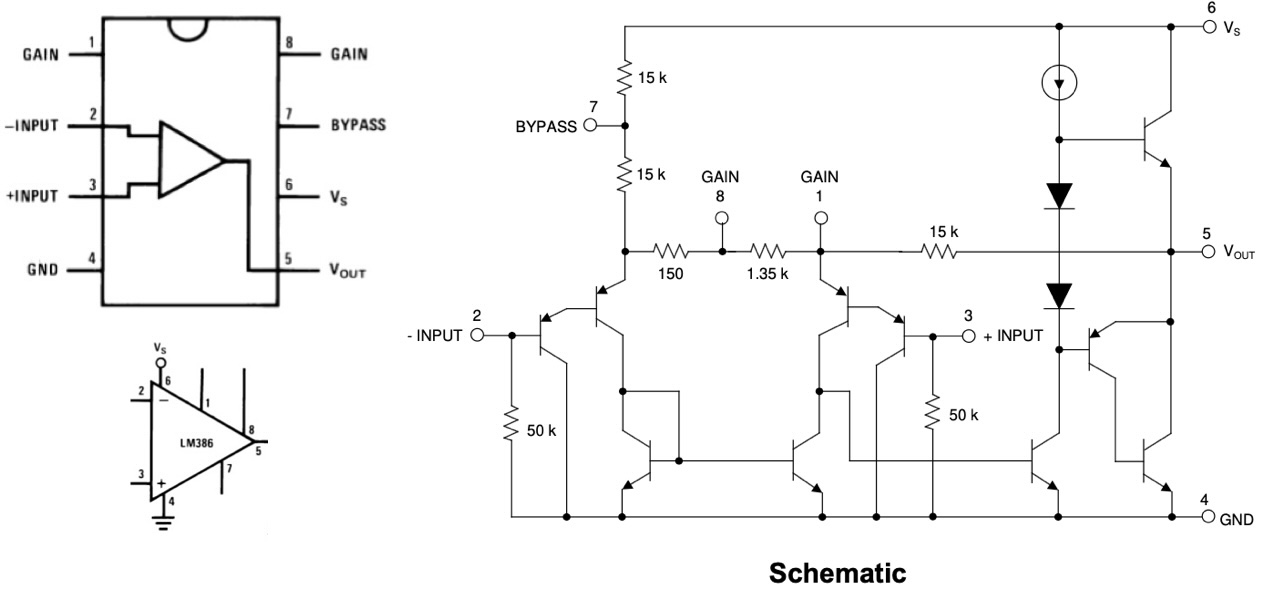
The LM386
The LM386 is a low-voltage, low-power audio power amplifier integrated circuit, originally developed by National Semiconductor in the mid-1970s. It operates from a single power supply, typically between 4V and 12V, and requires very few external components to produce an audio amplifier with a typical output power of up to 0.5W. Its internally configured voltage gain is 20 (26dB). The chip incorporates internal biasing, thermal protection and a bypass pin for reducing power-supply and bias-related noise. With its low component count, small size and ease of use, the LM386 is widely used in battery-powered audio devices, small radios, intercoms, portable speakers and simple guitar practice amplifiers.
Circuit Design
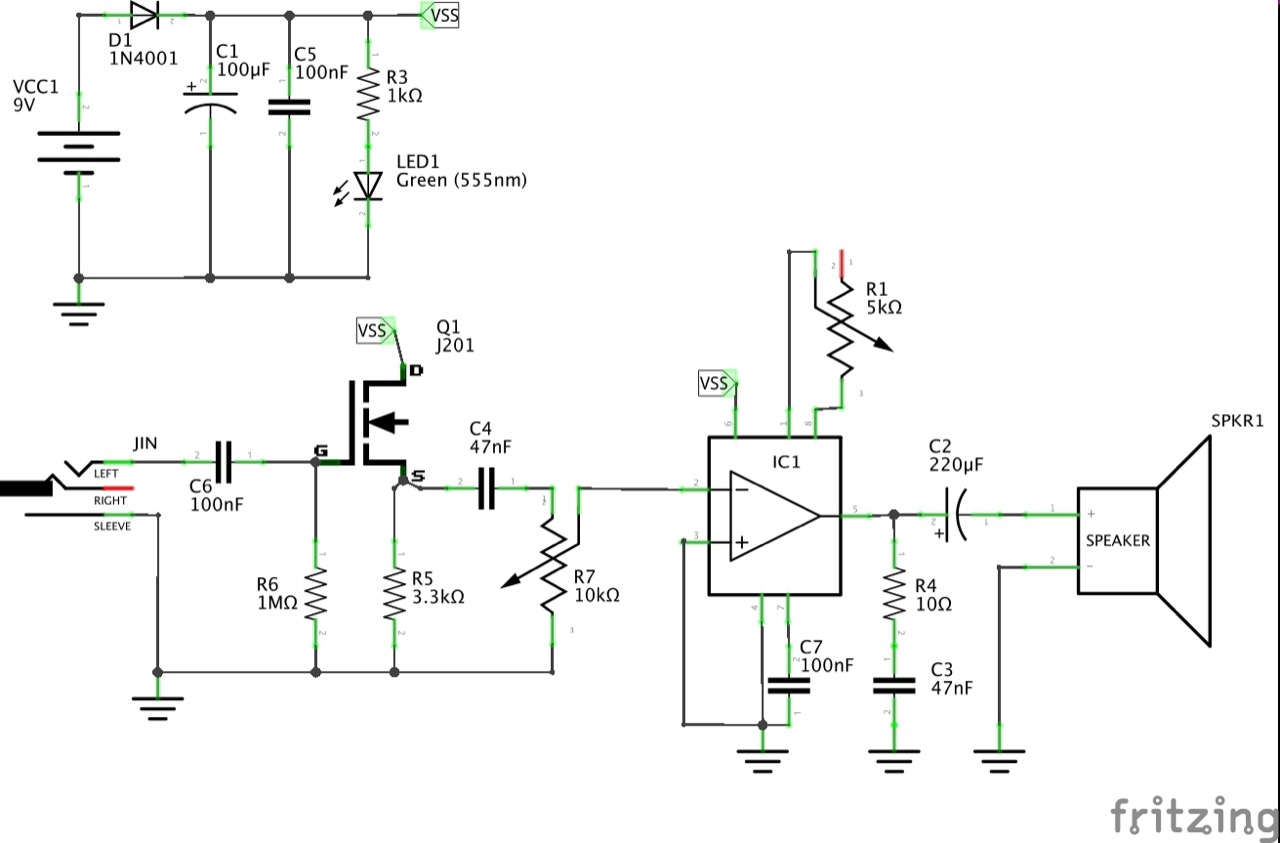
Designed with Fritzing: see Ruby.fzz.
NB: in the schematic below, the FET symbol is not quite correct (shows n-channel MOSFET instead of JFET)
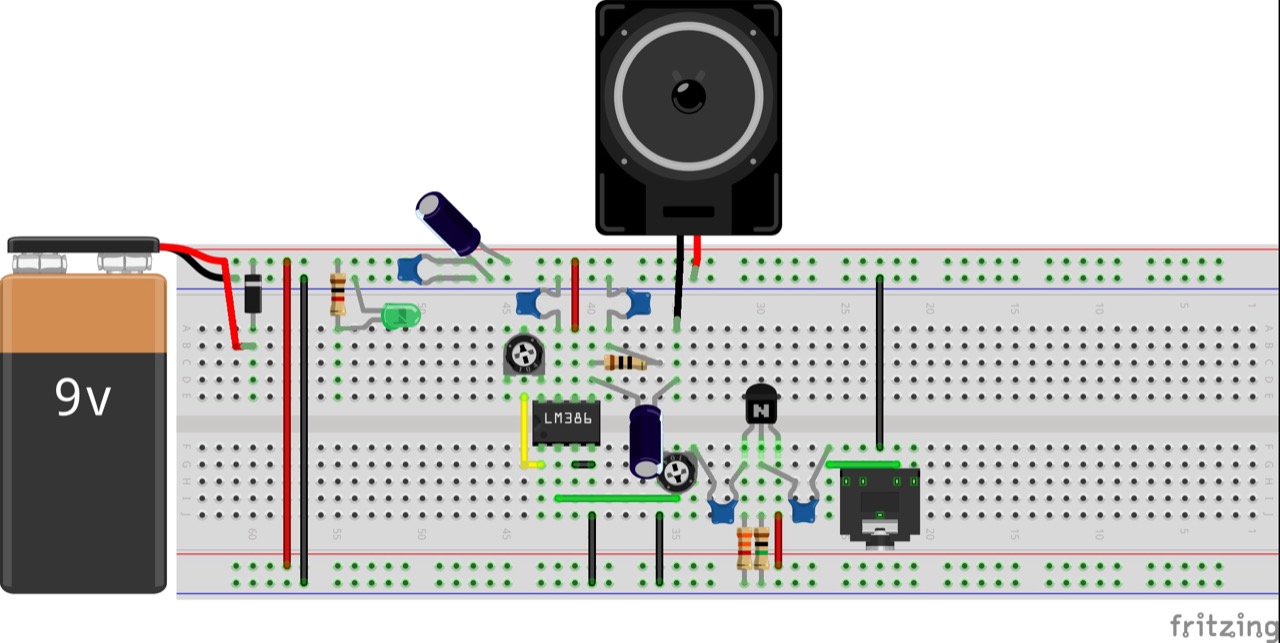
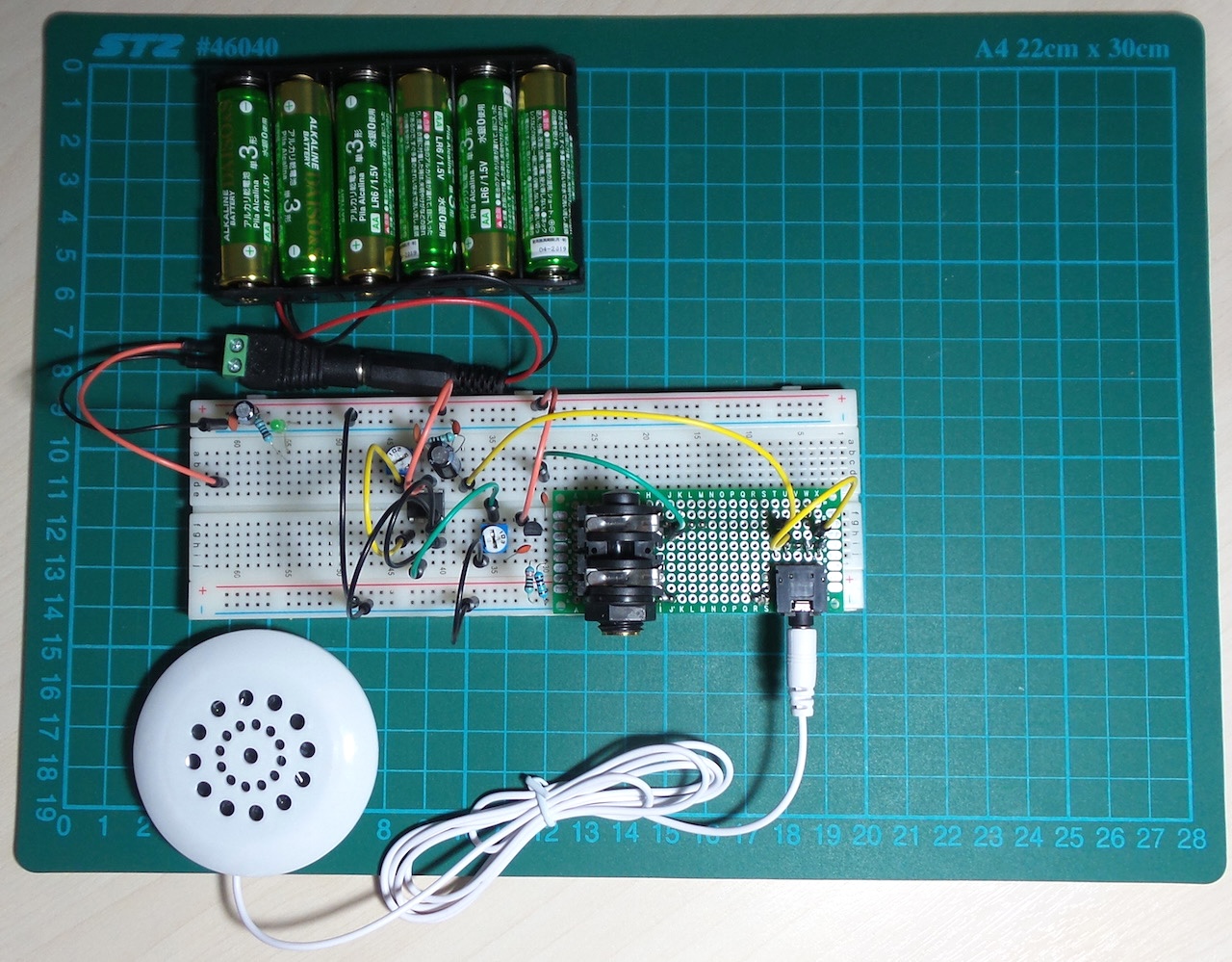
I first tested the amp on a breadboard. It works, but noise and interference can be a problem.
Protoboard Build
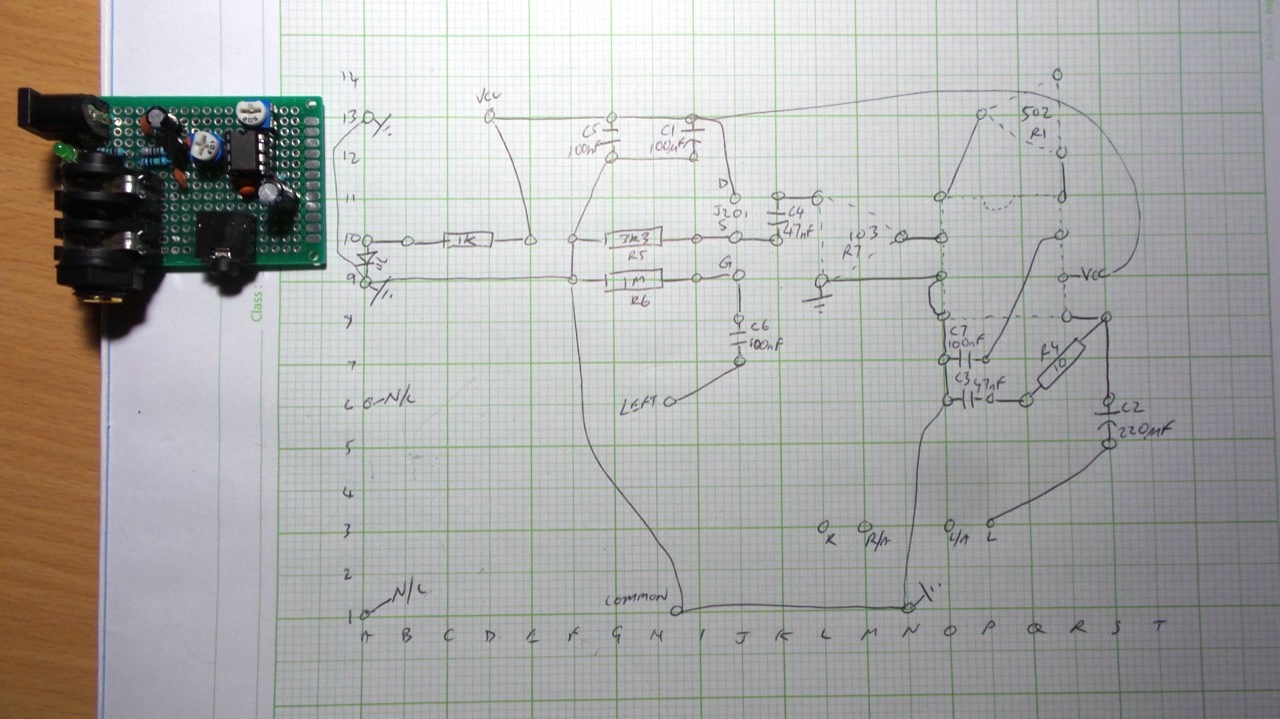
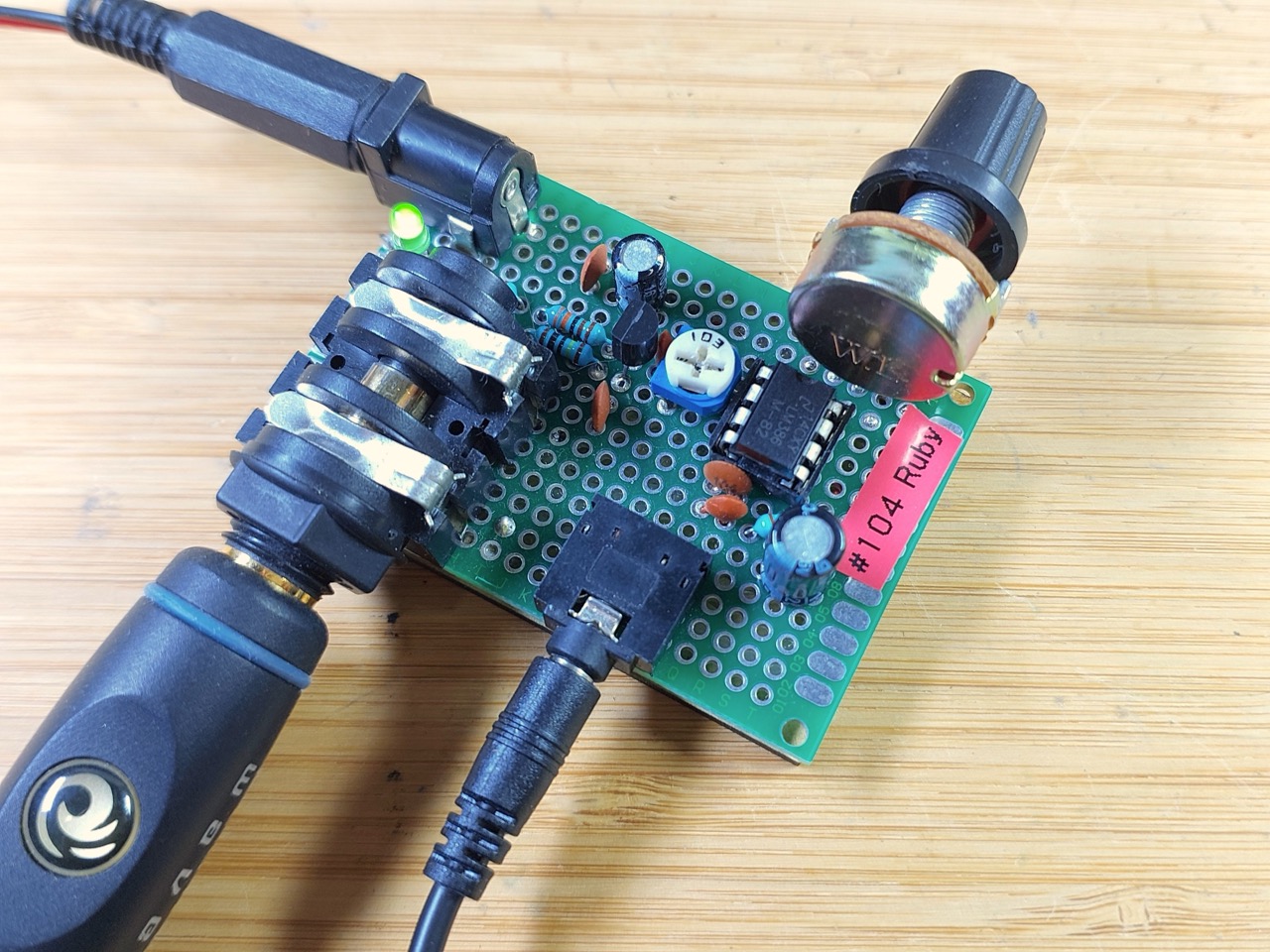
I transferred the design to some protoboard. Works really well!
I’ve left the volume control with a trimpot, as in practice it is not really required if the guitar has a volume control already.
Here’s the layout I used:
Credits and References
- LEAP#095 Little Gem
- Ruby 386-based 9v battery amp
- LM386 Product Info - TI
- LM386 datasheet
- J201 datasheet