
#095 Little Gem
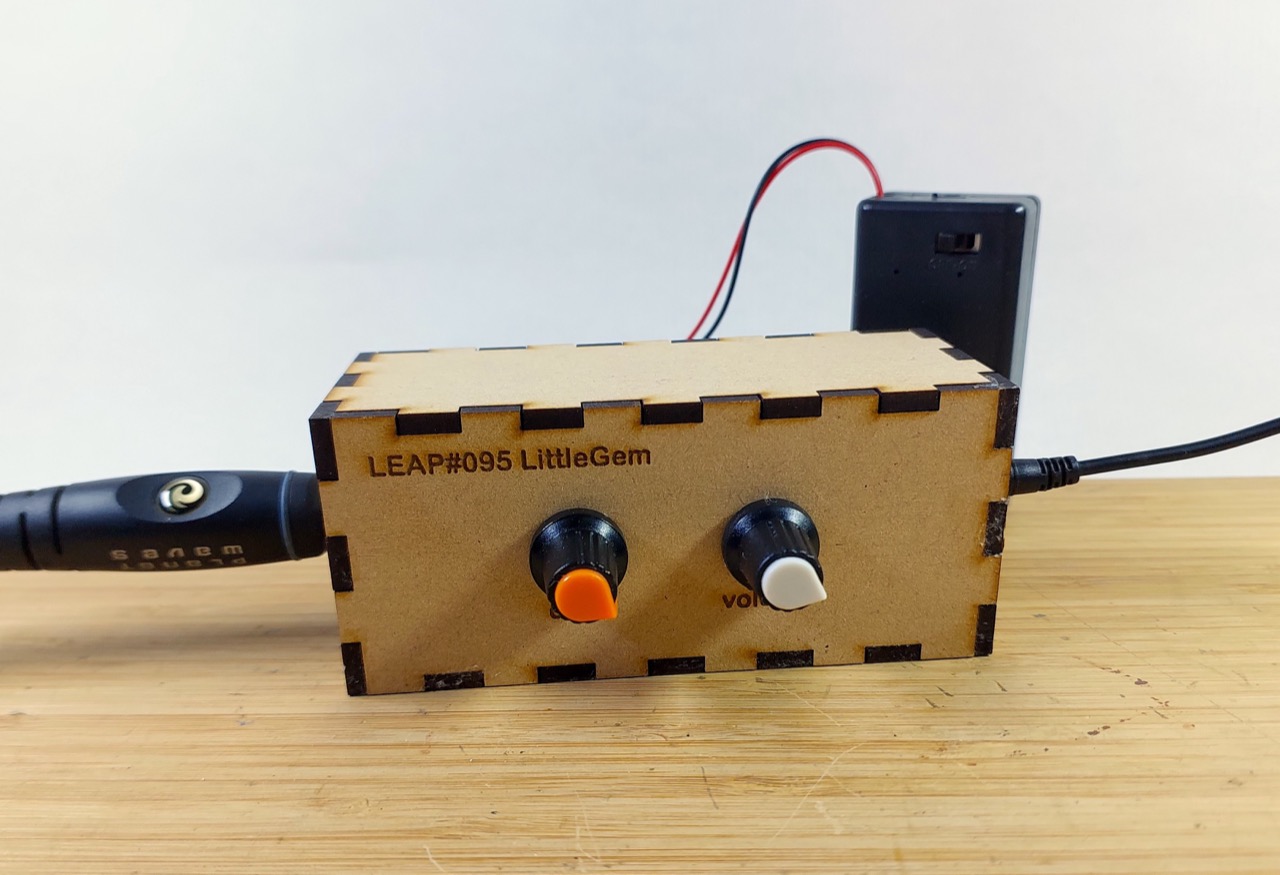
The LittleGem is a basic LM386 guitar power amp, based on the original Smokey design but with some critical improvements that make it a much more stable performer.
Notes
The “Little Gem” amplifier by runoffgroove is one of numerous LM386-based amplifiers descending from the original Smokey amp. The “A386” is a “Little Gem” variant by General Guitar Gadgets that basically packages the circuit with a few more frills like a conventional pedal.
The Smokey is about as basic as you can get - an LM386 and two caps, see LEAP#096 Smokey.
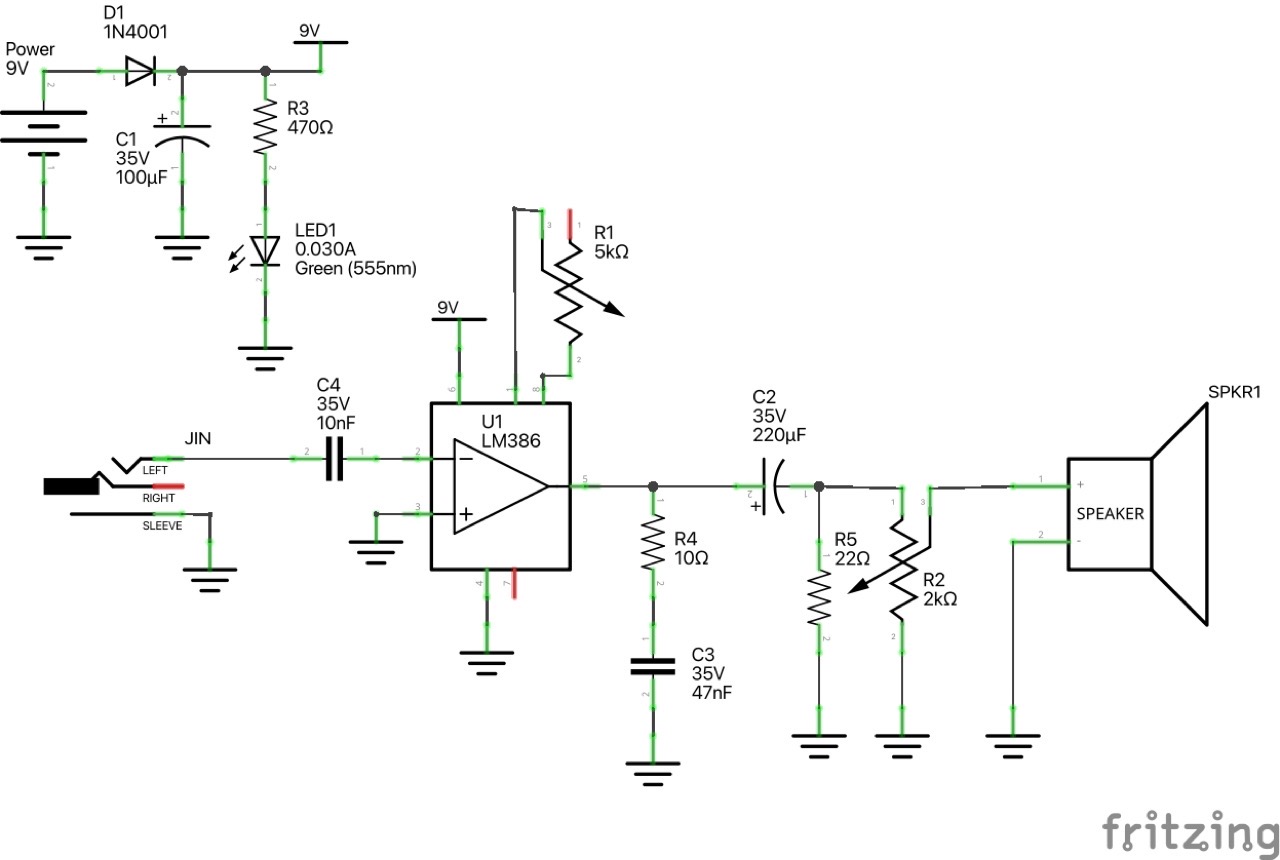
Little Gem/A386 takes some of the suggestions by Dave Stork and enhances the circuit in a few ways:
- adds variable gain control ranging from about 25 to 200 (the original Smokey was fixed at 200)
- adds input AC coupling with a 10nF capacitor and removes the 47μF bypass capacitor
- adds output-side master volume control
- adds an output-compensating Zobel Network
- increases the output coupling capacitor from 47μF to 220μF to improve low-end performance
- A386 modifications add a power indicator, power-source selection and reverse-polarity protection
The LM386
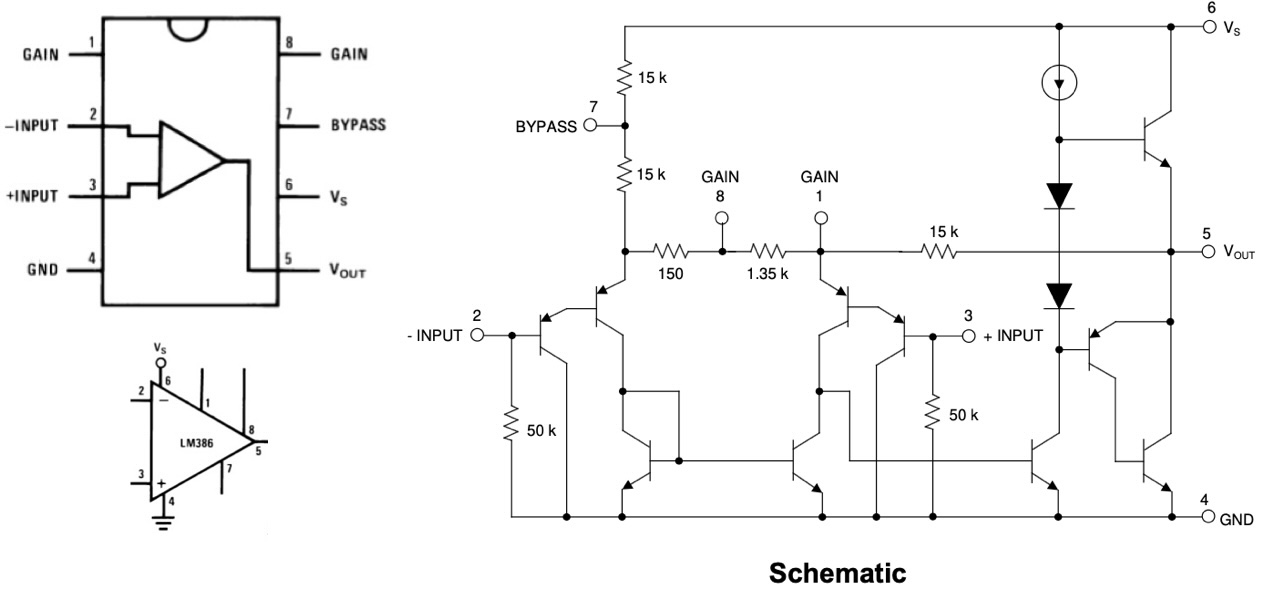
The LM386 is a low-voltage, low-power audio power amplifier integrated circuit, originally developed by National Semiconductor in the mid-1970s. It operates from a single power supply, typically between 4V and 12V, and requires very few external components to produce an audio amplifier with a typical output power of up to 0.5W. Its internally configured voltage gain is 20 (26dB). The chip incorporates internal biasing, thermal protection and a bypass pin for reducing power-supply and bias-related noise. With its low component count, small size and ease of use, the LM386 is widely used in battery-powered audio devices, small radios, intercoms, portable speakers and simple guitar practice amplifiers.
Circuit Design
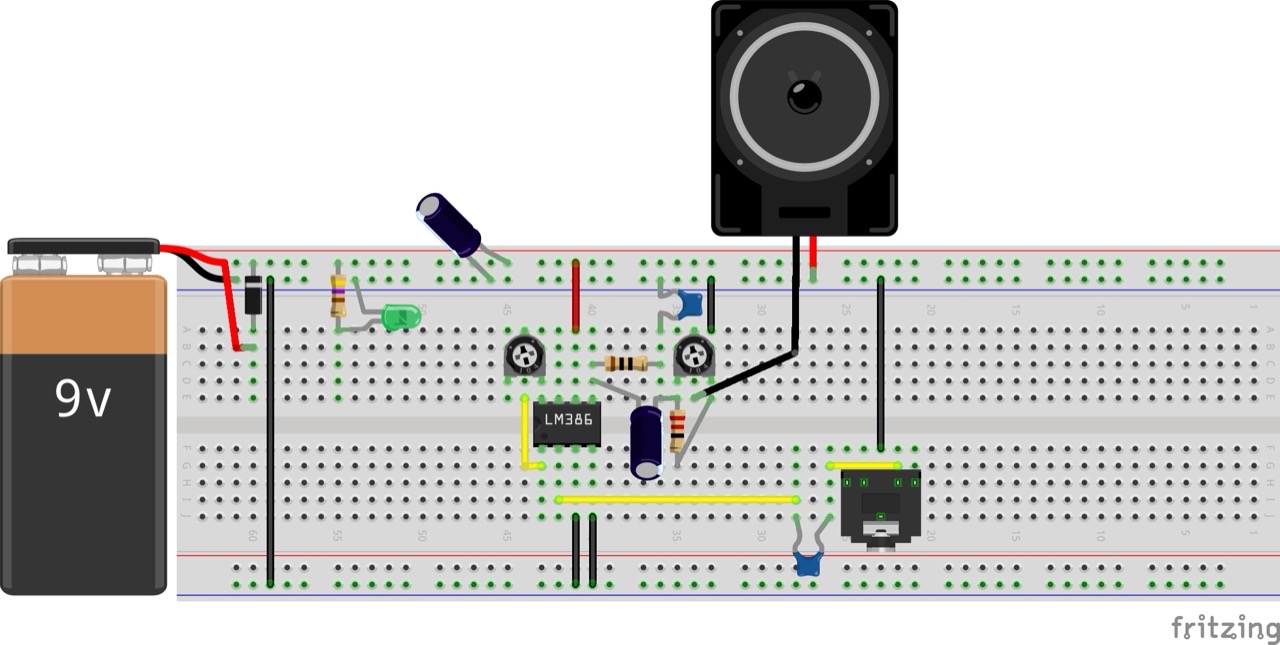
Designed with Fritzing: see LittleGem.fzz.
Some things to note for my build:
- I didn’t have anything as small as a 25Ω rheostat for output volume control, but a 22Ω resistor across a 2kΩ trimpot provides decent control, from a range of about 0-22Ω
- the 1N4001 sacrifices quite a bit of headroom for some reverse-polarity protection
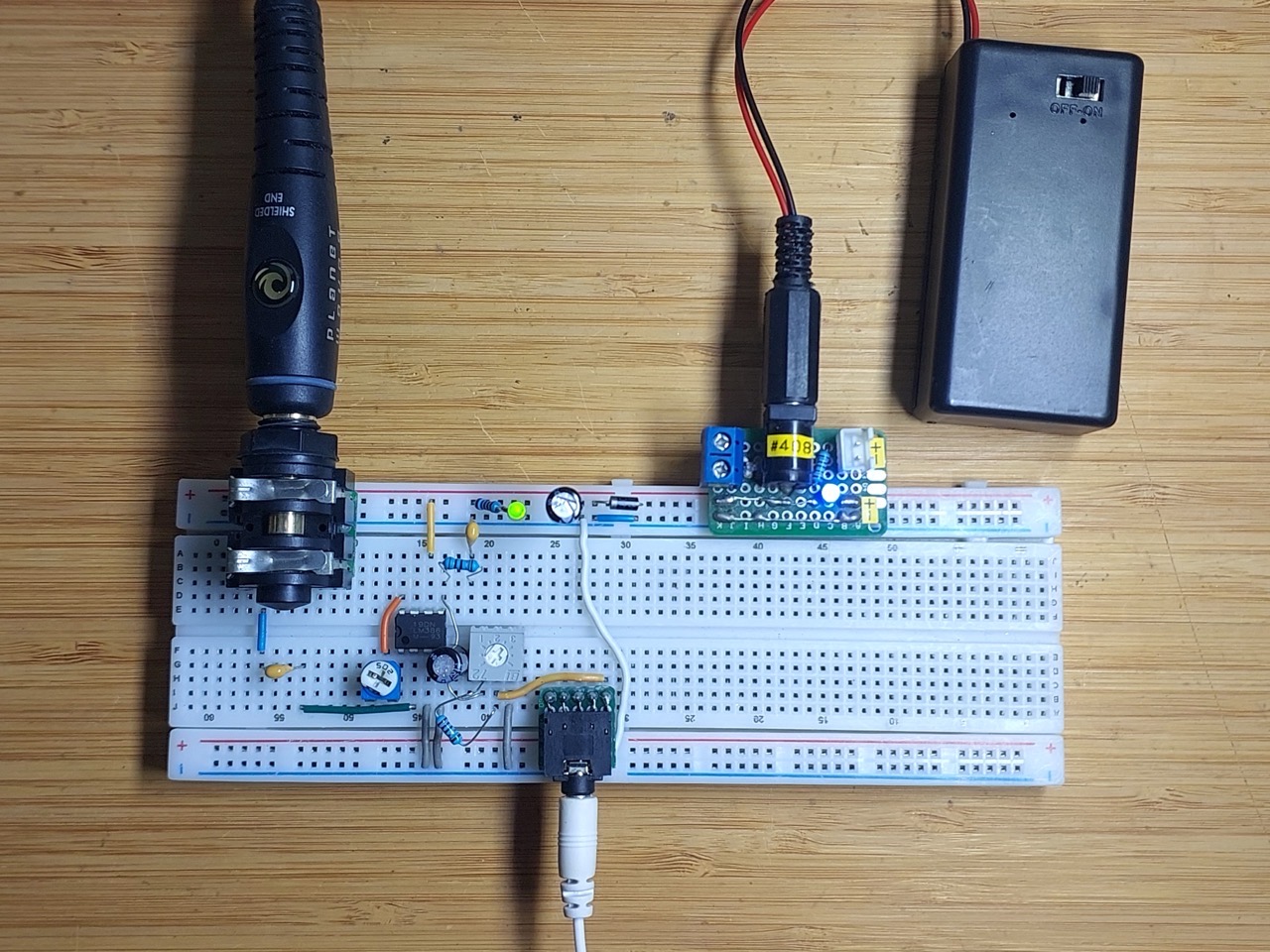
Parts
| Ref | Qty | Part | Notes |
|---|---|---|---|
| U1 | 1 | LM386N-1 | |
| C1 | 1 | 100µF electrolytic capacitor | |
| C2 | 1 | 200µF electrolytic capacitor | |
| C3 | 1 | 47nF ceramic capacitor | polyester (Mylar) used in protoboard v2 |
| C4 | 1 | 10nF ceramic capacitor | polyester (Mylar) used in protoboard v2 |
| R1 | 1 | 5kΩ pot | |
| R2 | 1 | 2kΩ pot | |
| R3 | 1 | 470Ω resistor | |
| R4 | 1 | 10Ω resistor | |
| D1 | 1 | 1N4001 rectifier diode | unused in final build |
| LED1 | 1 | 3mm green LED | unused in final build |
Performance
The circuit works surprisingly well on a breadboard. Distorted tones work well. I was not able to get a very clean signal, except at a very low volume.
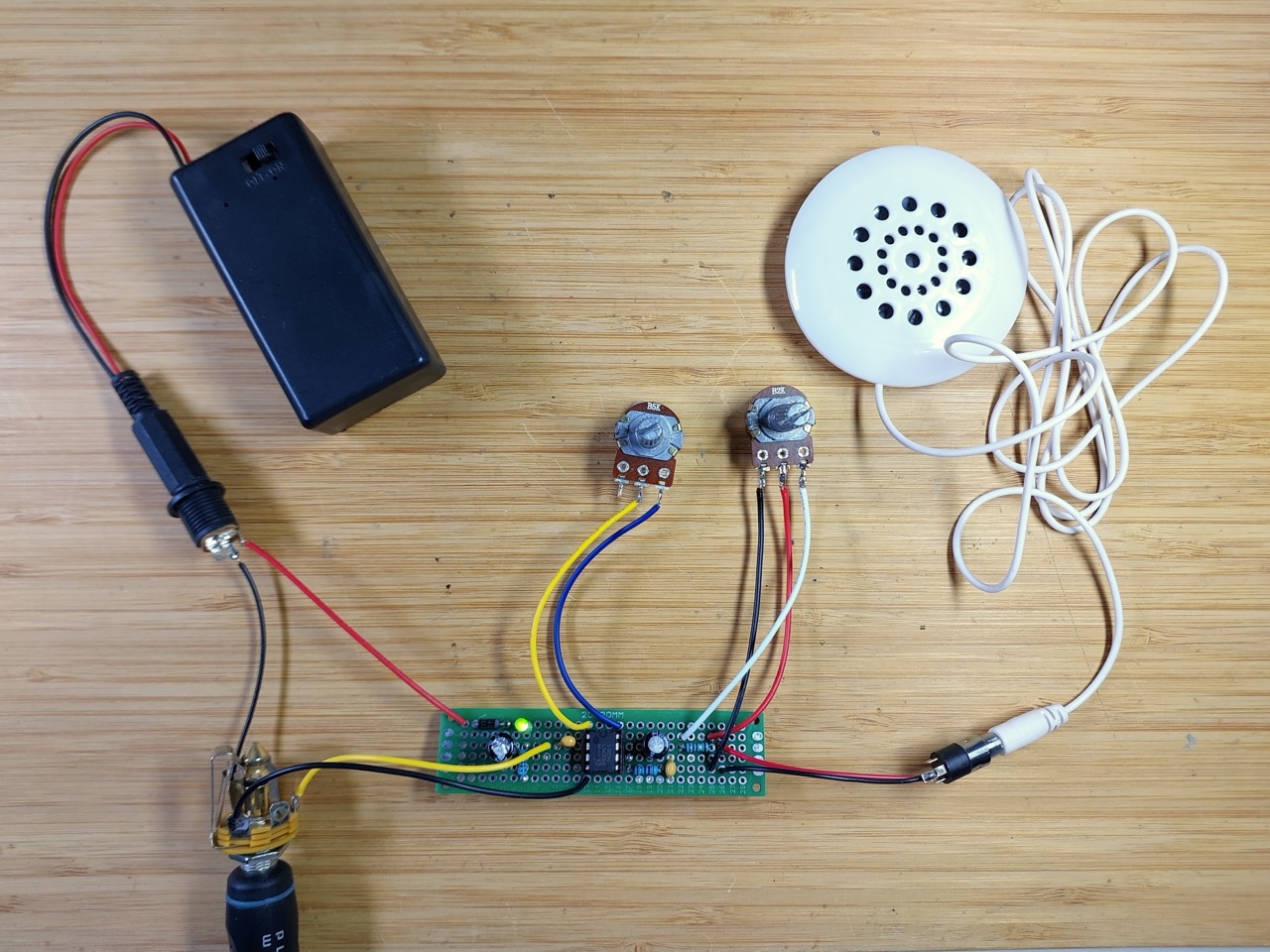
For a small build, the speaker itself is a major contributor to the performance of the system. I am using a small 8Ω speaker that works adequately for testing.
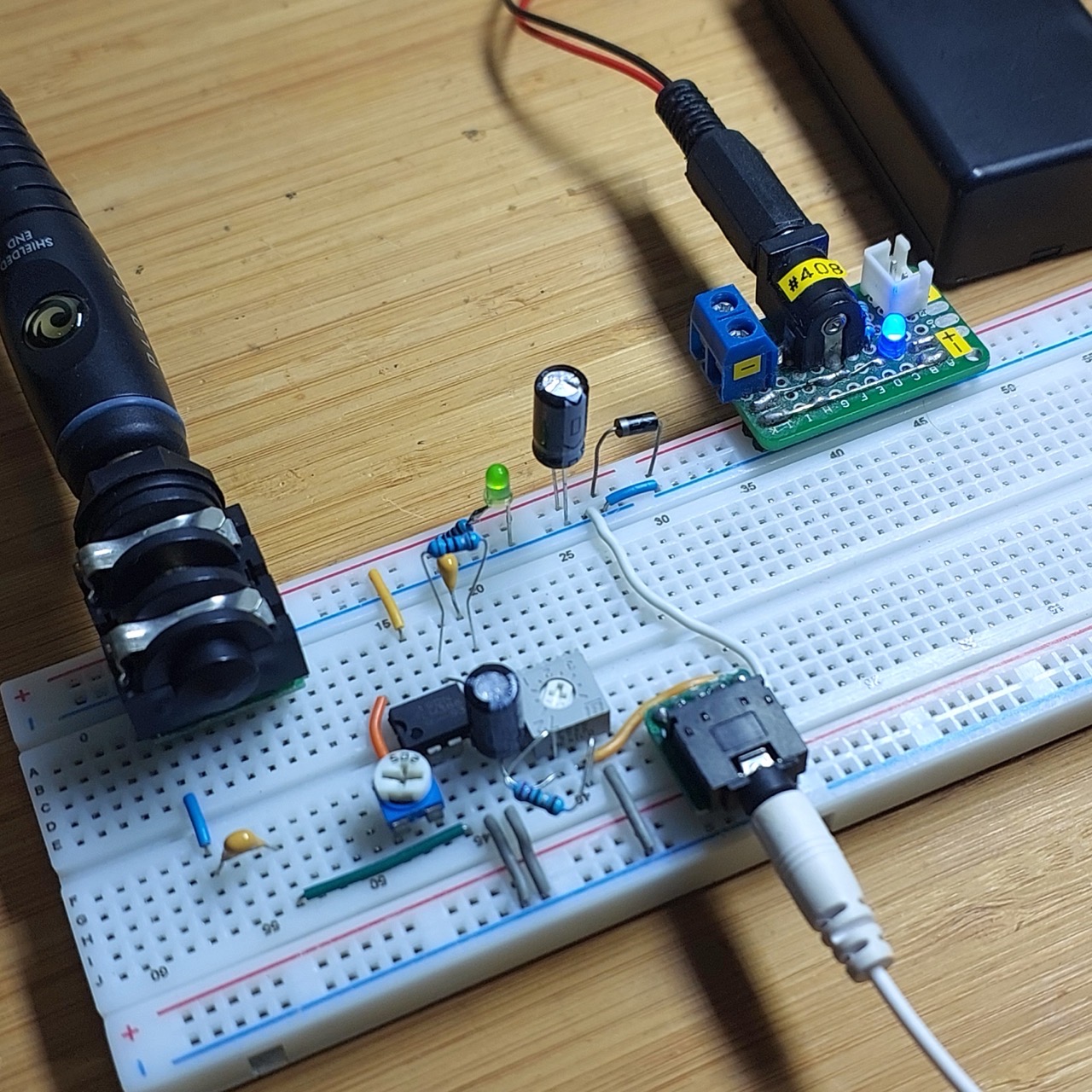
Protoboard Build v1
I’ve transferred the design to a piece of protoboard. This worked OK, however it was still quite susceptible to interference and early clipping.
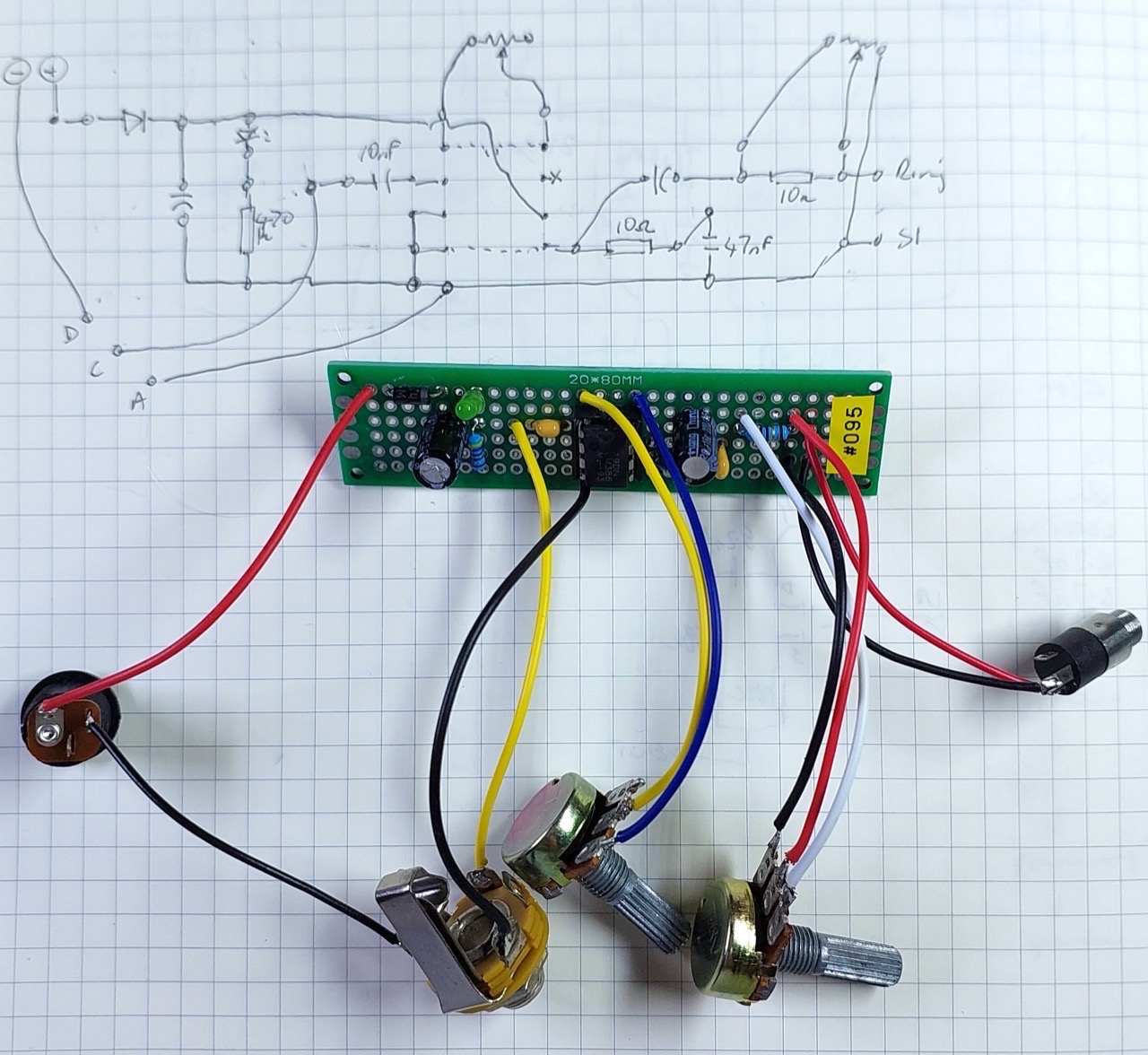
Protoboard Build v2
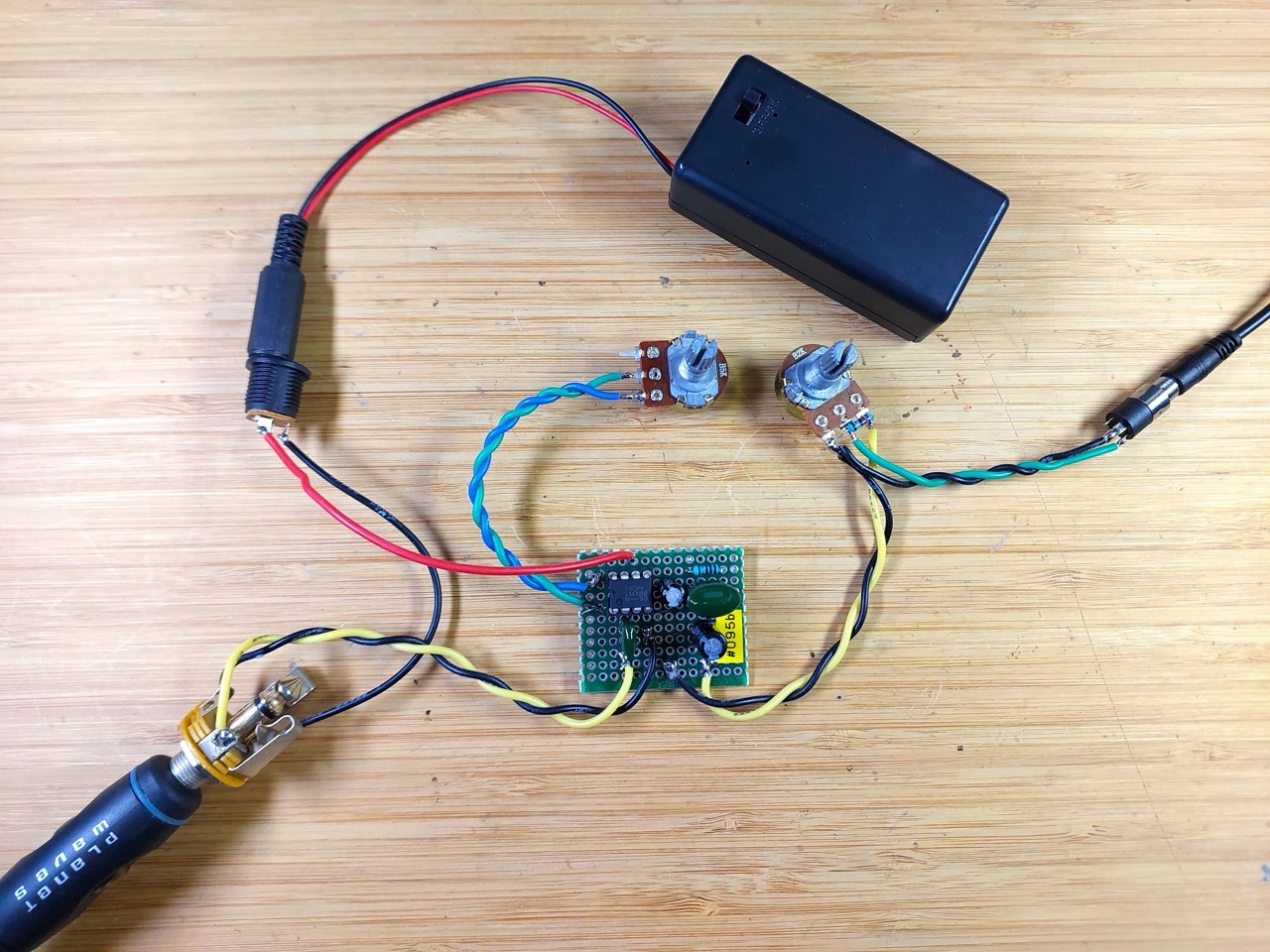
I made another version on protoboard, with some modifications that greatly improve performance. Essential changes:
- use polyester (mylar) capacitors for the main ones in the audio chain.
- use twisted wire connections
- star ground pattern
- removed the reverse-polarity protection diode
- removed the power indicator LED (for now)
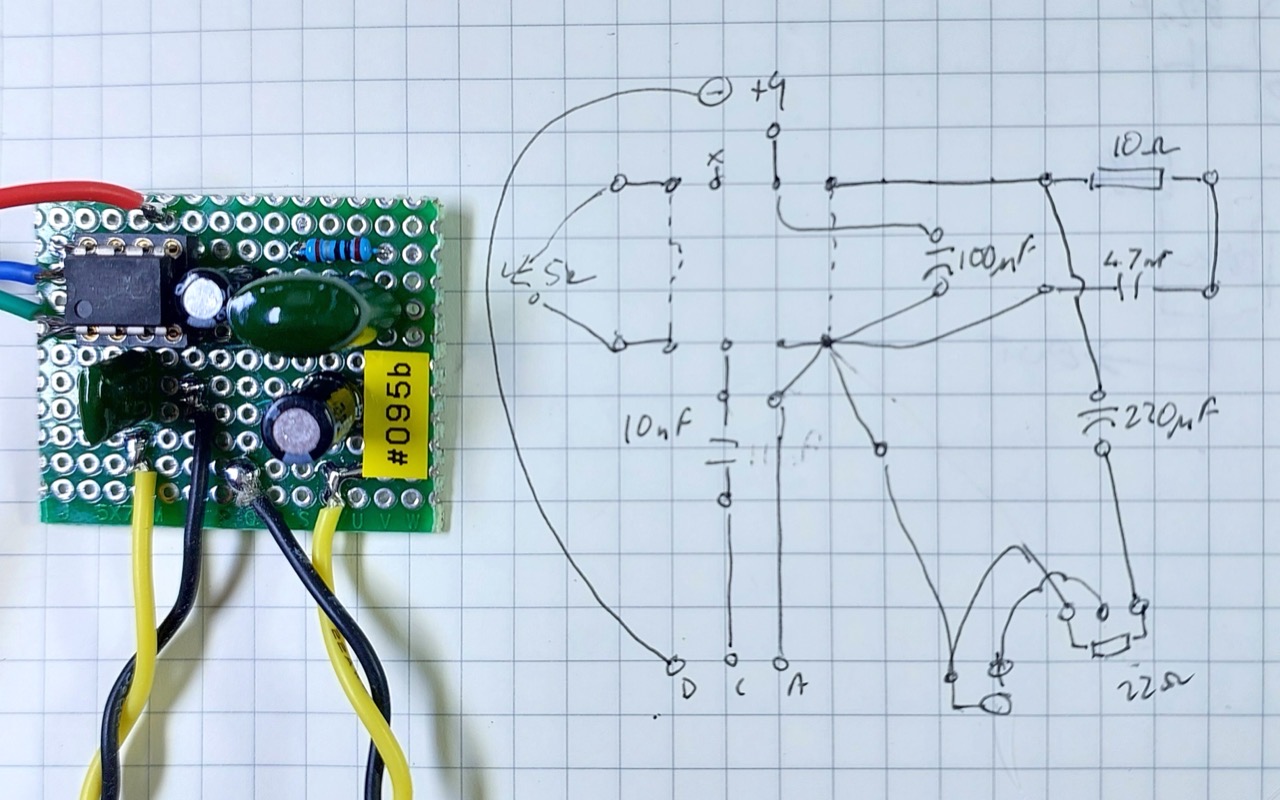
In action..

Case
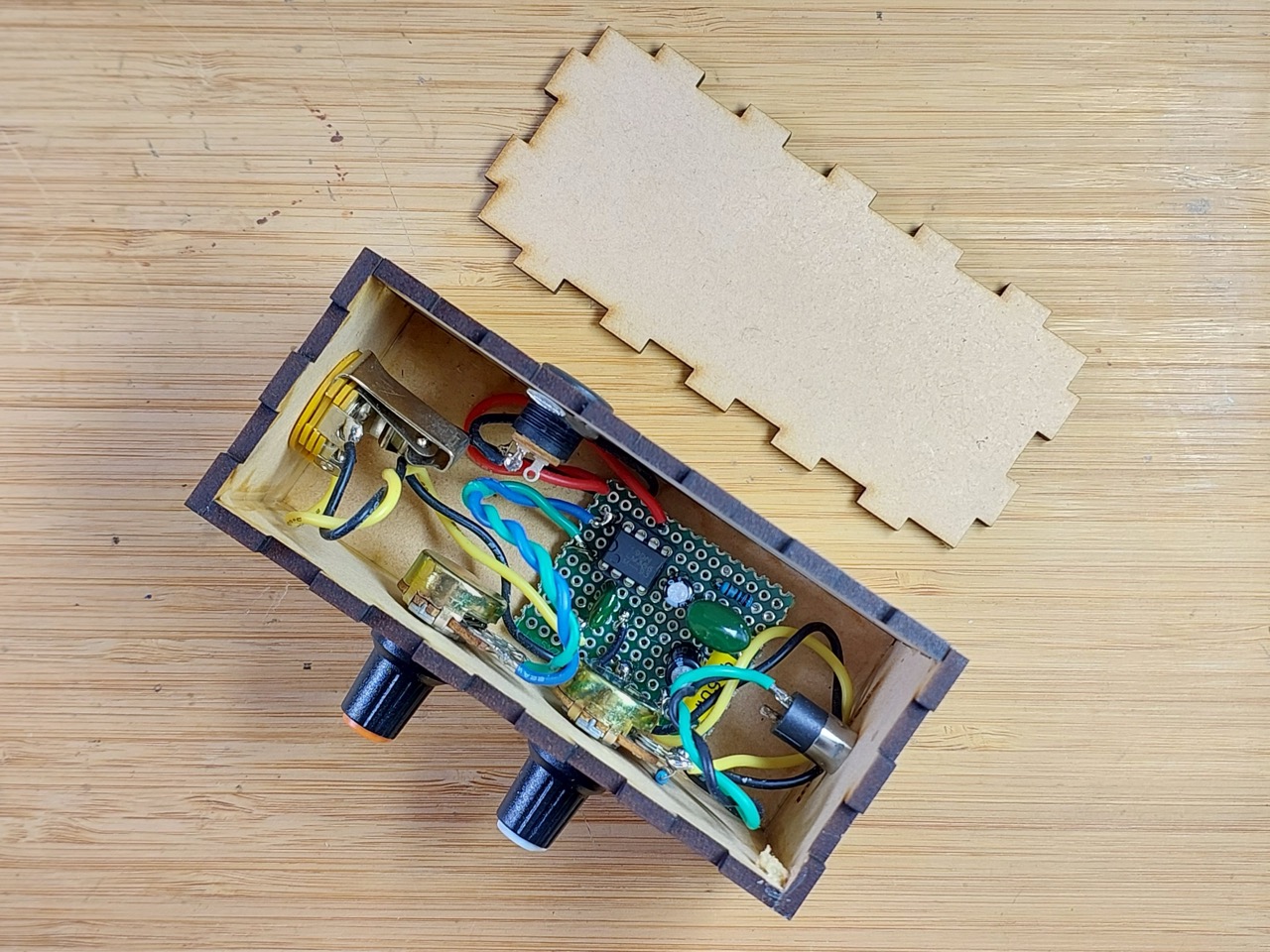
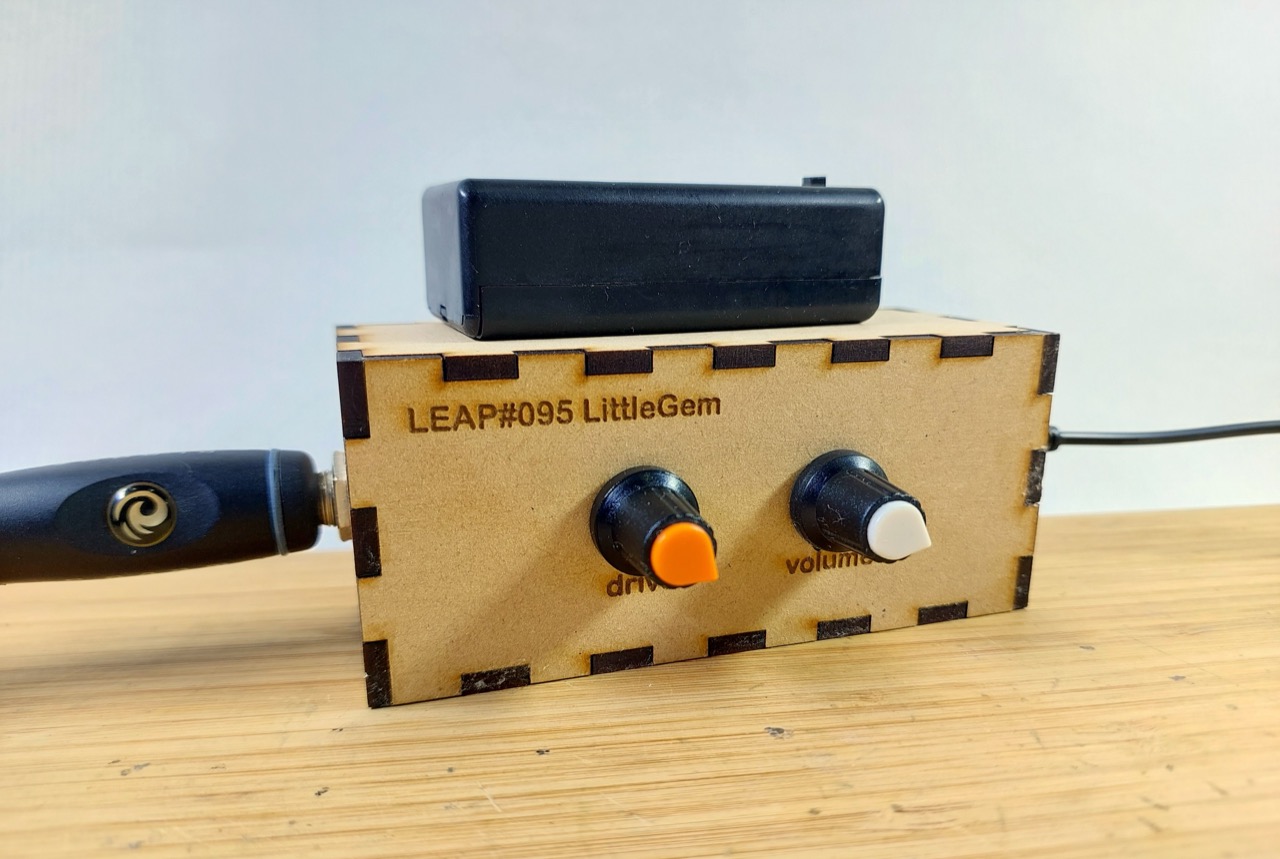
I made a simple MDF case with MakerCase - box-template.svg, and refined the design in Affinity Designer, see little-gem.afdesign.


I prepared the parts in little-gem.xs for cutting from 3mm MDF on my Library’s xTool S1 Laser Cutter.
Mounting the components after cutting:
Final unit:
Credits and References
- LEAP#096 Smokey
- Little Gem & Little Gem MkII
- General Guitar Gadgets A386 Amp
- Smokey Amps - official site
- Smokey Amp Analysis - excellent circuit analysis of the original Smokey amp.
- Observations on the Smokey circuit by Dave Stork
- LM386 Product Info - TI
- LM386 datasheet