
#805 3DU5C Phototransistor
A quick review and test of the 3DU5C metal-encapsulated silicon phototransistor, used for light detection in the visible and infrared spectrum.
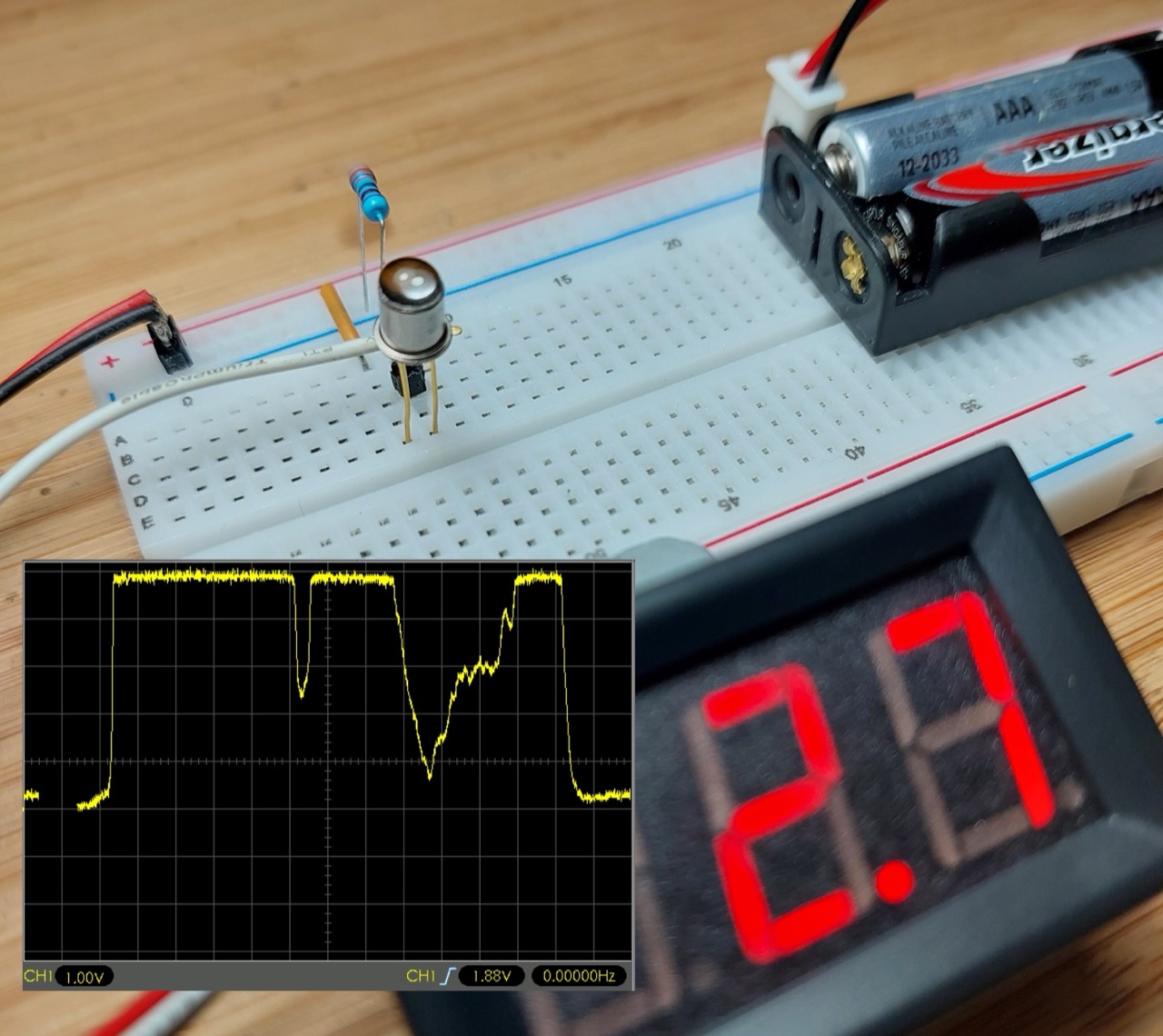
Notes
The 3DU5C metal-encapsulated silicon phototransistor has a peak sensitivity at 880nm in the infrared spectrum, but it is relatively good sensitivity through the visible spectrum. This makes it very useful in a wide range of applications.
Specifications:
- NPN Silicon Phototransistor
- Model : 3DU5C
- Working Voltage (max) : 10V
- Reverse Breakdown Voltage : 15V
- Dark Current : 0.3uA
- Photocurrent : 0.5-1mA
- Power Consumption : 30mW
- Peak Wavelength : 880nm
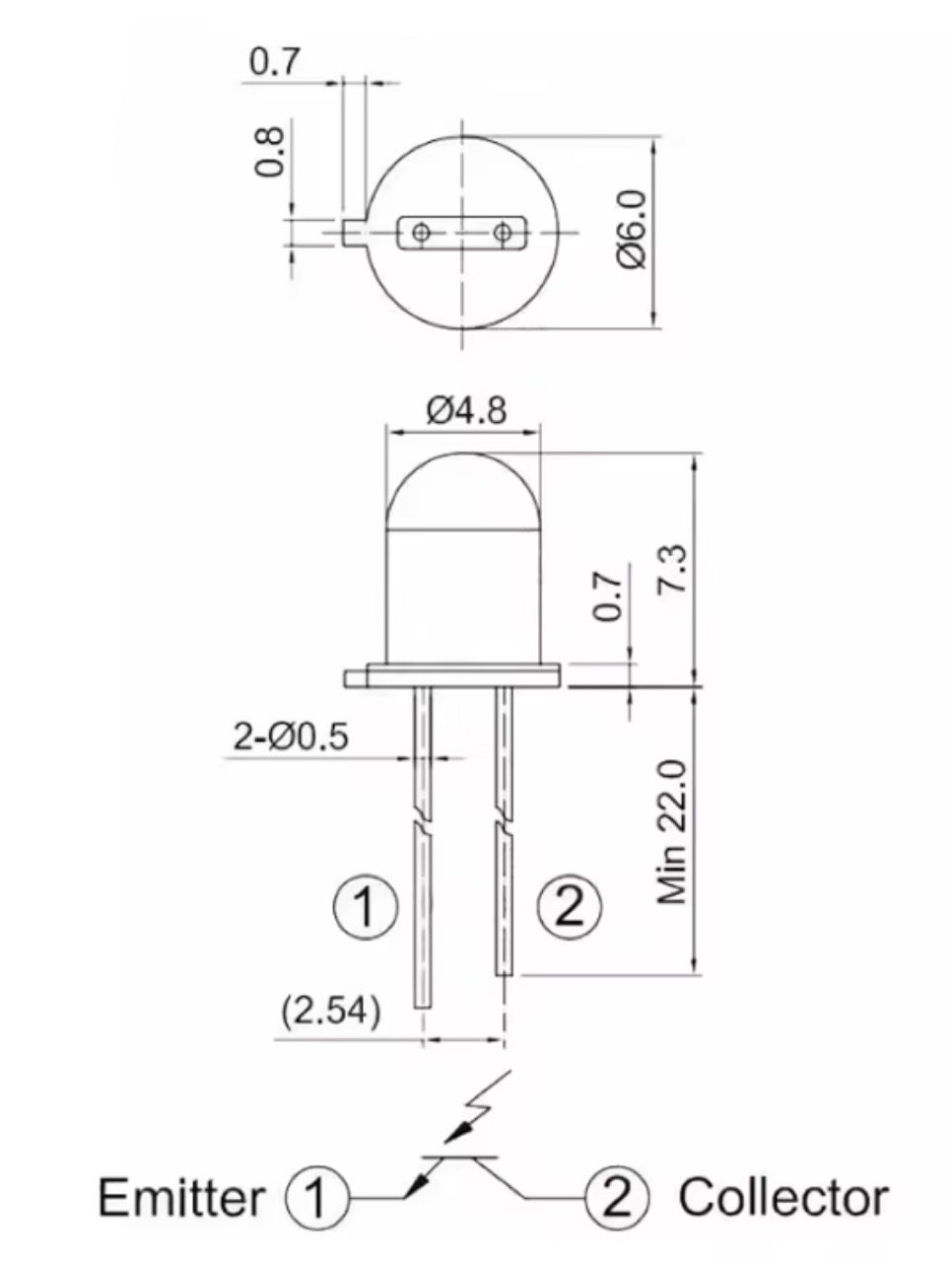
- Body Size : 7 x 5mm/ 0.28” x 0.2”(L*D)
- Total Length : 28mm/ 1.1”
- External Material : Metal
- Weight : 3g
The package has equal length leads. The emitter is identified by the metal tab on the can.
Comparing Photodiodes and Phototransistors
See also:
- The Art of Electronics 12.6.1 Photodiodes and phototransistors (3rd Edition).
- Infrared and Photodetectors WEbinar by DigiKey with Würth Elektronik
Photodiodes and phototransistors are both light-sensitive semiconductor devices, but they behave quite differently.
Photodiodes:
- A diode optimized to generate current when light hits its junction
- Light creates electron–hole pairs → produces a small photocurrent.
- Used in photoconductive mode (reverse-biased) or photovoltaic mode (like a tiny solar cell).
- Characteristics:
- Fast response (nanoseconds to microseconds).
- Low gain — the photocurrent is small because there’s no internal amplification.
- Very linear and precise.
- Wide wavelength range (UV → visible → IR depending on material).
- Can be used for high-speed or analog light-measurement.
- Common uses:
- Remote controls (as a raw sensor or inside modules).
- Optical communication receivers.
- Light meters / lux sensors.
- Fiber optics.
Phototransistors:
- A transistor (BJT or sometimes photo-darlington) where light replaces the base current.
- Light generates base current → transistor amplifies it → much larger collector current.
- Characteristics:
- High gain — much more sensitive than a photodiode.
- Slower (microseconds to milliseconds) because transistor junctions store charge.
- More nonlinear behavior.
- Often packaged in IR receiver modules.
- Requires some biasing and has more electrical complexity.
- Common uses:
- IR object detection.
- Slotted opto-switches / rotary encoders.
- Simple ambient light detection.
- Counter/frequency detection at modest speeds.
In summary:
| Feature | Photodiode | Phototransistor |
|---|---|---|
| Sensitivity | Low | High (amplified) |
| Speed | Very fast | Slower |
| Linearity | Very good | Moderate |
| Noise | Lower | Higher |
| Output current | Small | Large (gain × photo-generated currents) |
| Best for | Precision & high-speed sensing | Easy, high-sensitivity detection |
Test Circuit Design
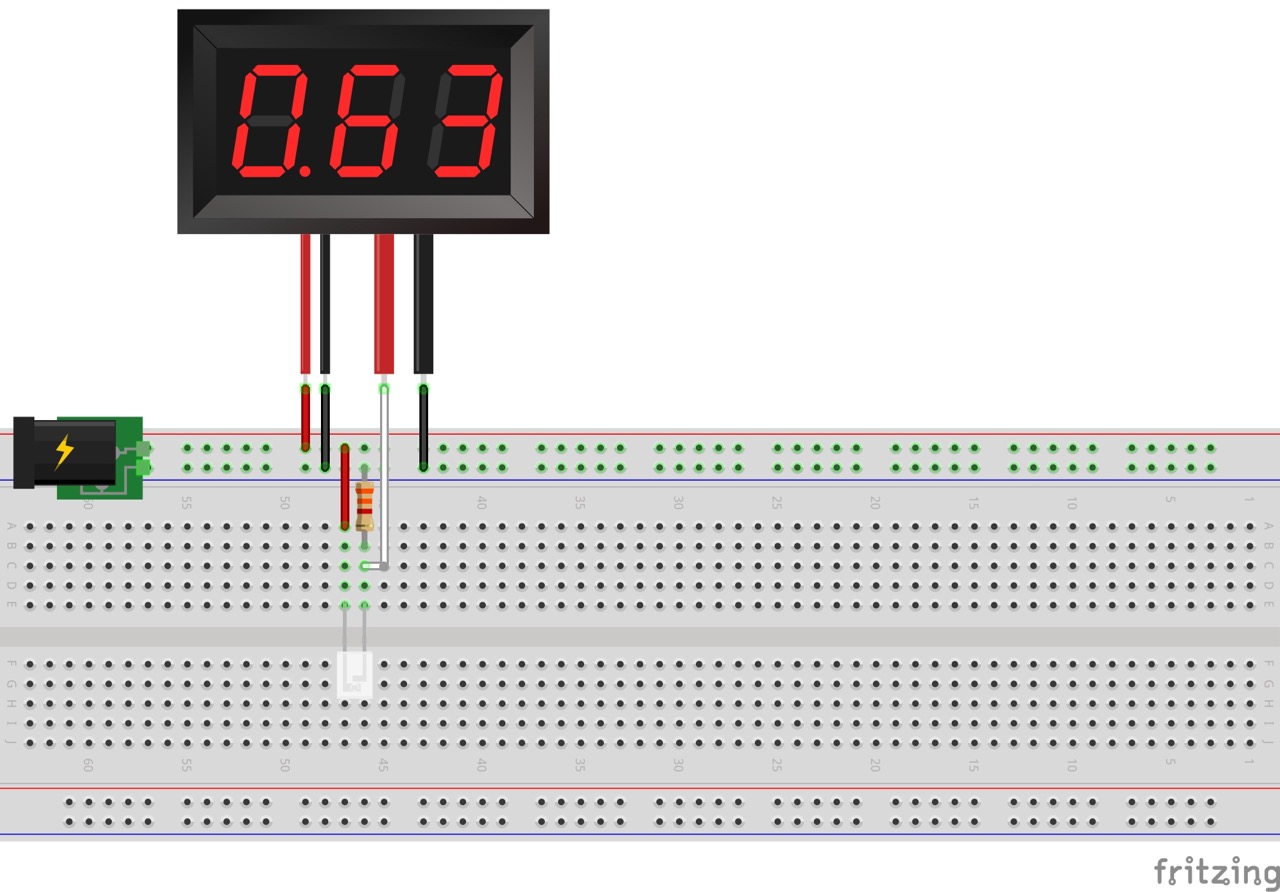
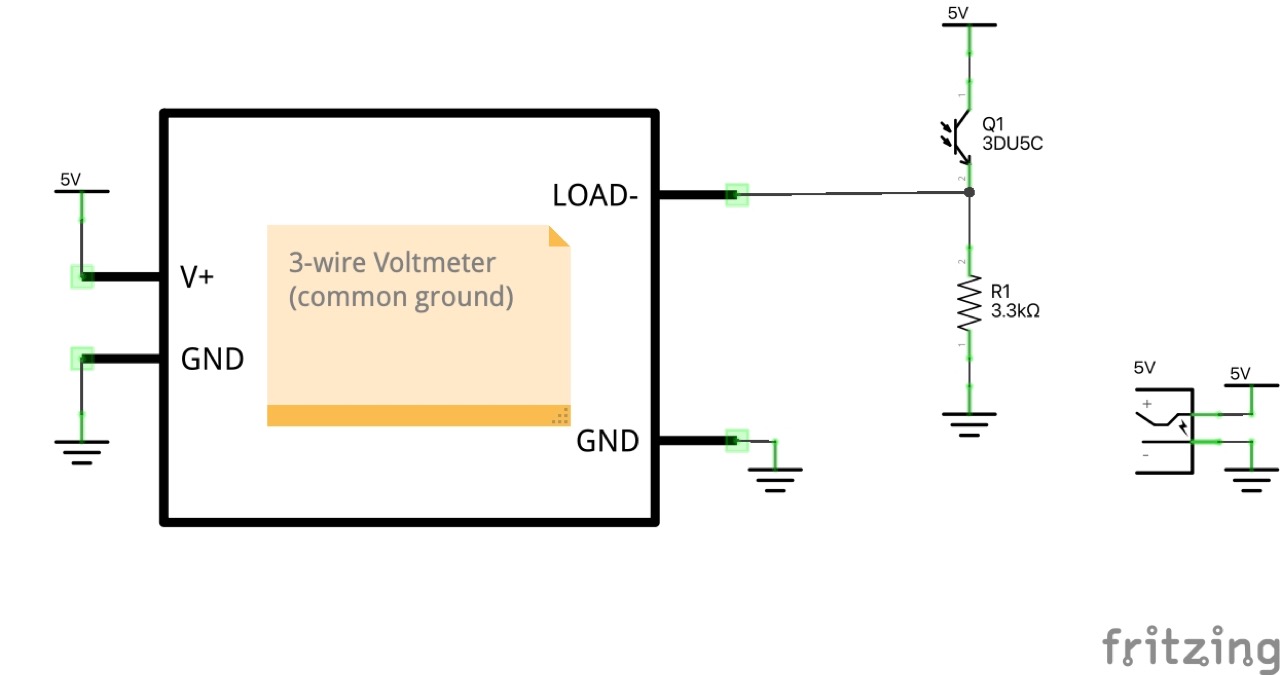
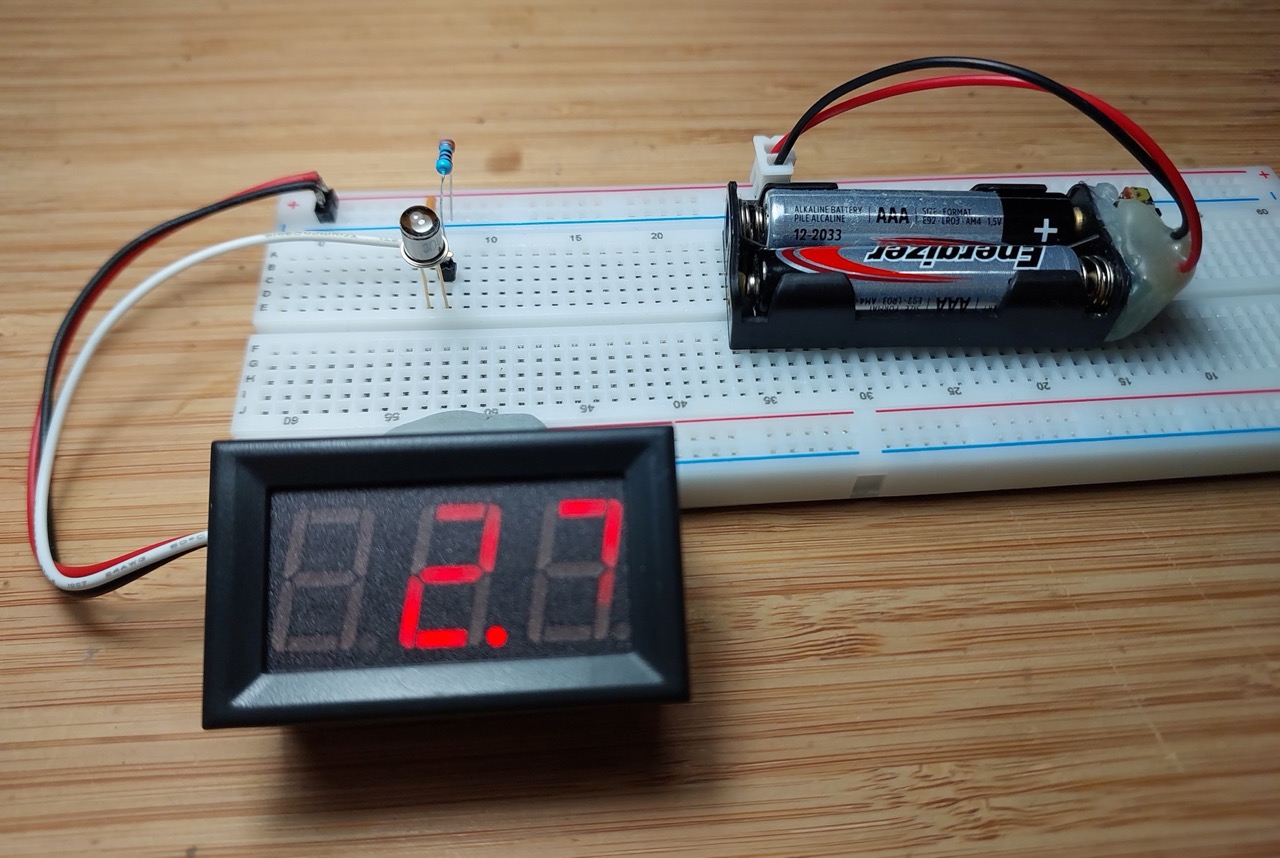
This is a quick test of the sensitivity of the 3DU5C:
- positioned on the high-side of a 3.3kΩ resistor, so voltage measured at the emitter will increase with brightness
- a 3-wire voltmeter attached to monitor the voltage
Note: this is similar to the tests described in Make: More Electronics Experiment 4: Measuring Light
Designed with Fritzing: see 3DU5C.fzz.
Test Results
Responds well to a wide range of light sources:
- LED lamp
- sunlight
- red, green, blue LEDs
- IR LED
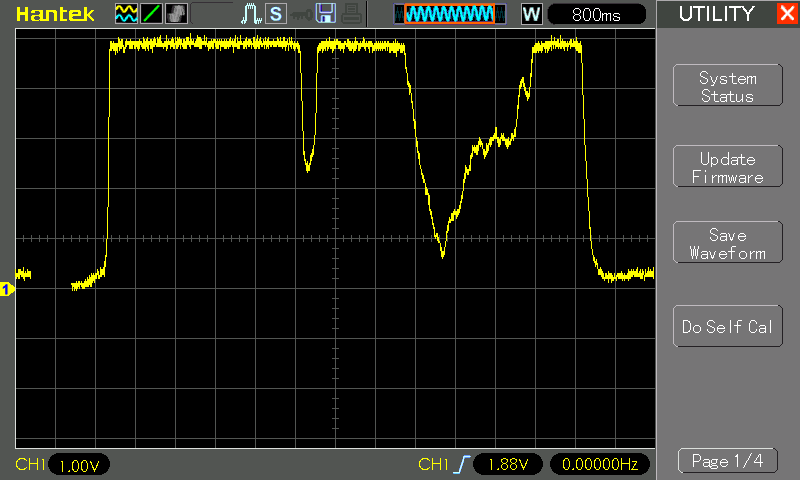
The following is a scope trace of the voltage being excited with a blue LED:
Credits and References
- “2PCS 3DU5C Phototransistor Transistor Silicon Phototransistor Transistor Metal Package 2-pin NPN” - aliexpress seller
- https://www.alibaba.com/product-detail/3DU5C-Silicon-Phototransistor-Two-Pin-Metal_1601271212767.html - example alibaba source
- The Art of Electronics 12.6.1 Photodiodes and phototransistors (3rd Edition).
- Infrared and Photodetectors WEbinar by DigiKey with Würth Elektronik
- Make: More Electronics Experiment 4: Measuring Light