#873 LM386 Oscillator
Letting the LM386 amplifier break free as the oscillator it always wanted to be.
Notes
There’s a saying that amplifiers are oscillators that don’t, and oscillators are amplifiers that do. Controlling oscillation can be a major challenge especially in high gain LM386 circuits. So let’s embrace the fact and actually make an oscillator.
The LM386 TI Datasheet. actually has an example of this - see 9.2.6 Square Wave Oscillator.
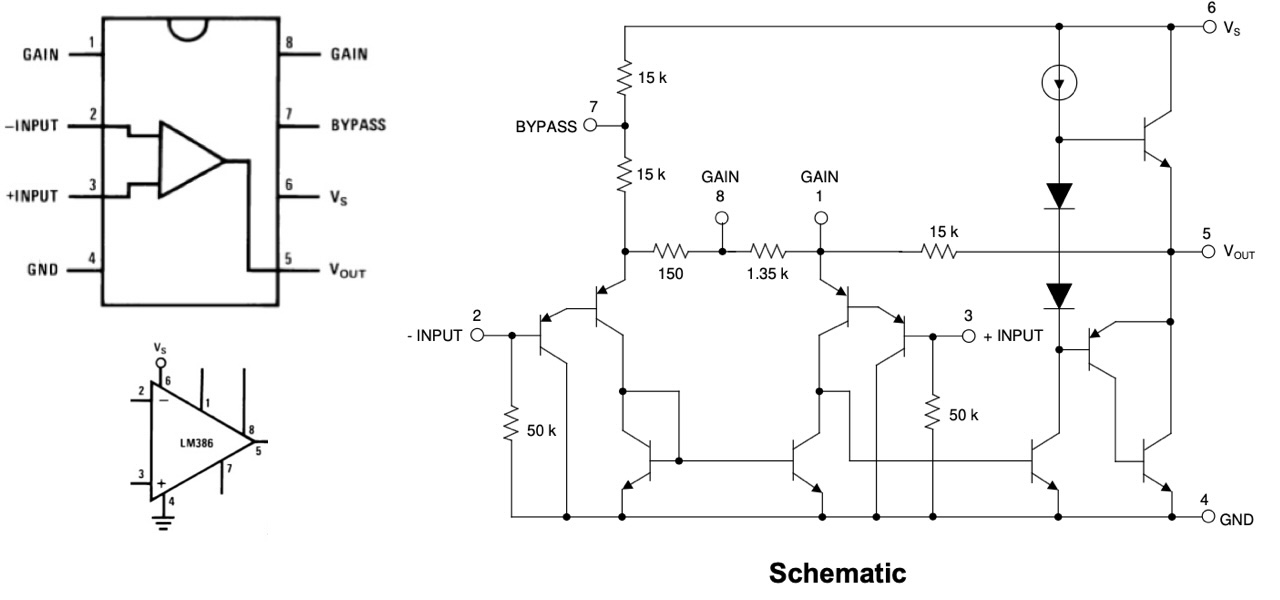
The LM386
The LM386 is a low-voltage, low-power audio power amplifier integrated circuit, originally developed by National Semiconductor in the mid-1970s. It operates from a single power supply, typically between 4V and 12V, and requires very few external components to produce an audio amplifier with a typical output power of up to 0.5W. Its internally configured voltage gain is 20 (26dB). The chip incorporates internal biasing, thermal protection and a bypass pin for reducing power-supply and bias-related noise. With its low component count, small size and ease of use, the LM386 is widely used in battery-powered audio devices, small radios, intercoms, portable speakers and simple guitar practice amplifiers.
Circuit Design
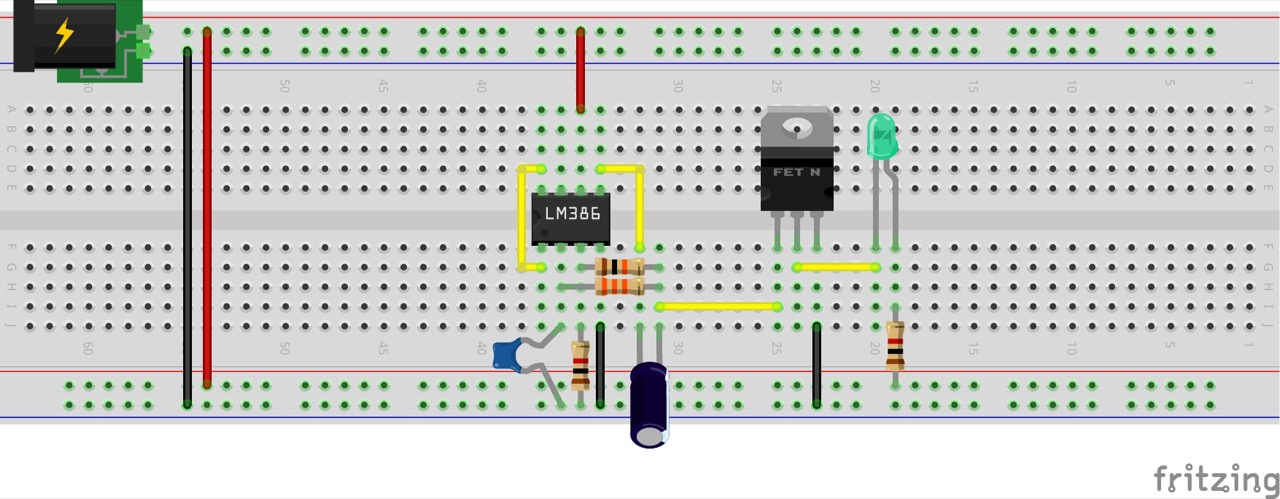
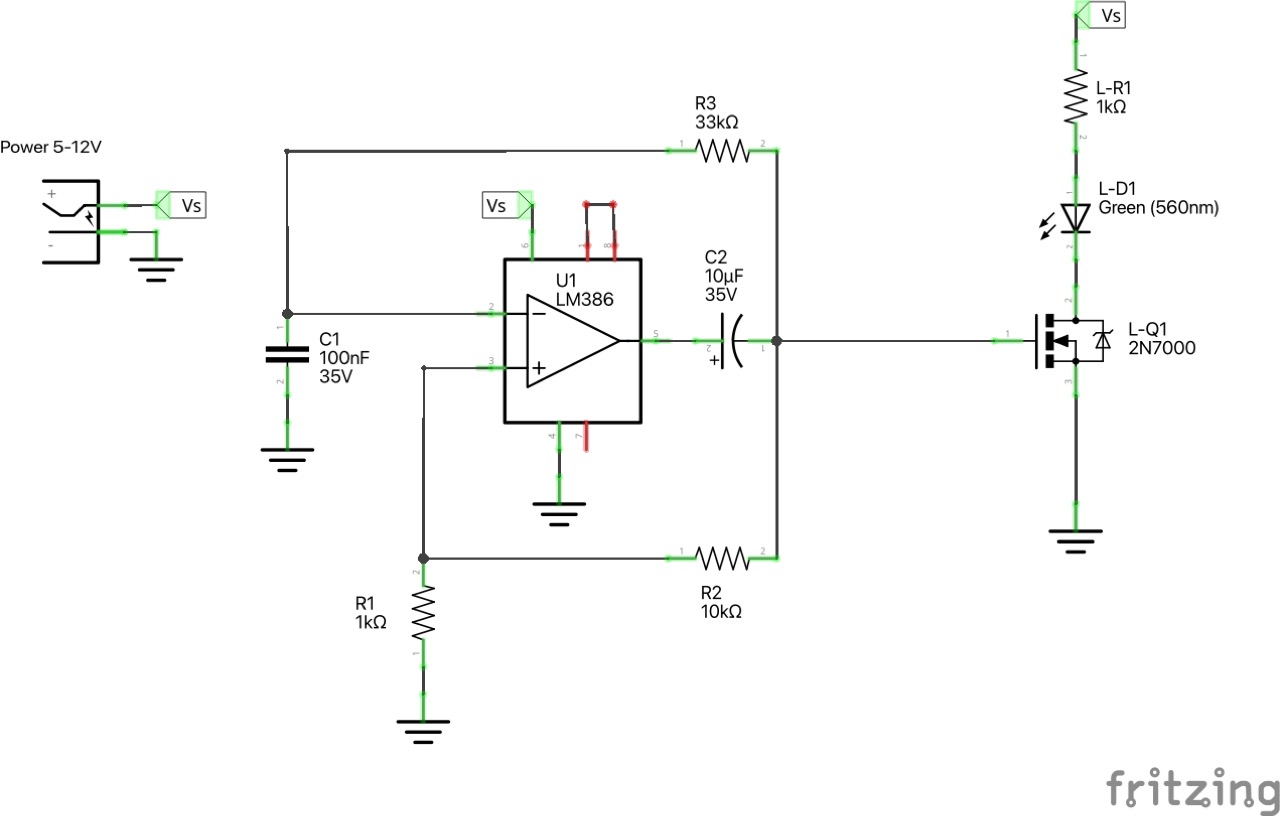
This is based on the circuit in the datasheet, but with some component variations to match common values. The output is buffered by a MOSFET and just drives an LED for demonstration purposes.
Designed with Fritzing: see Oscillator.fzz.
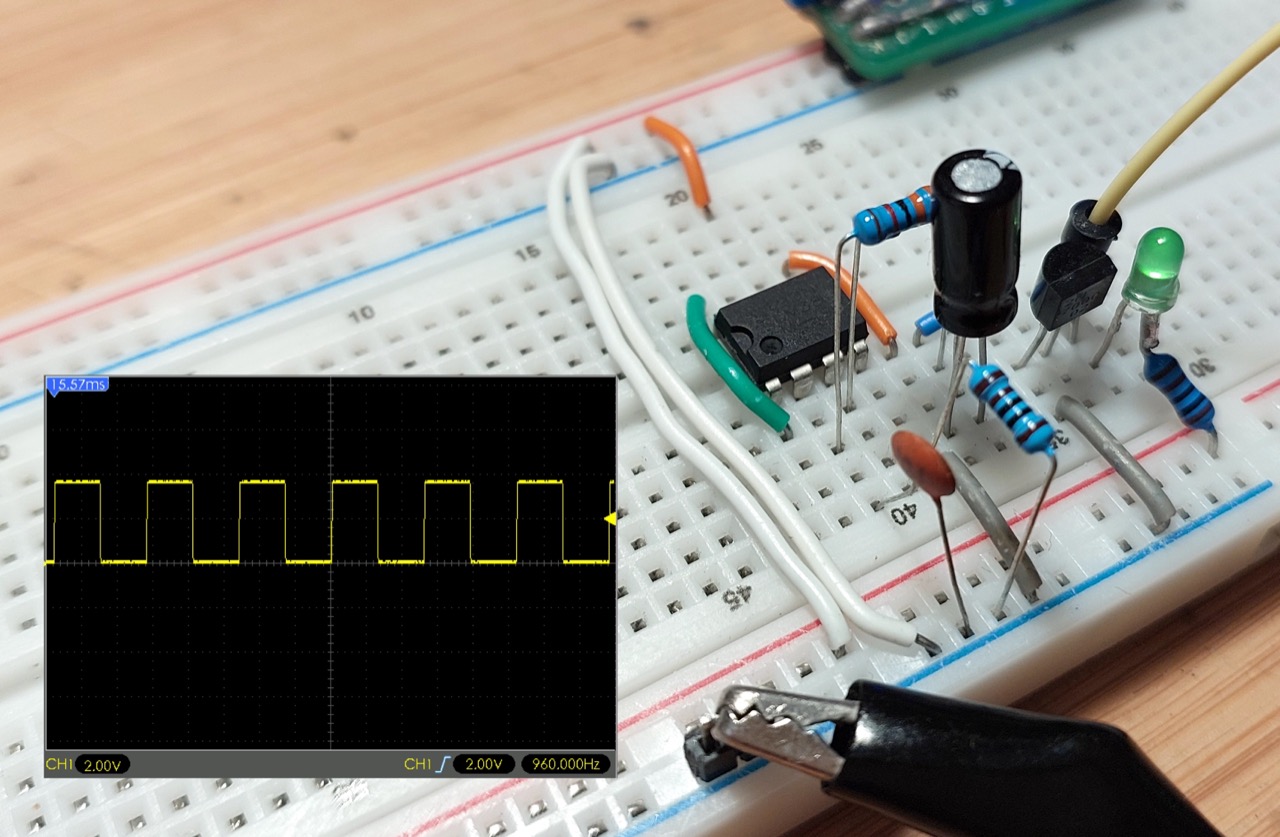
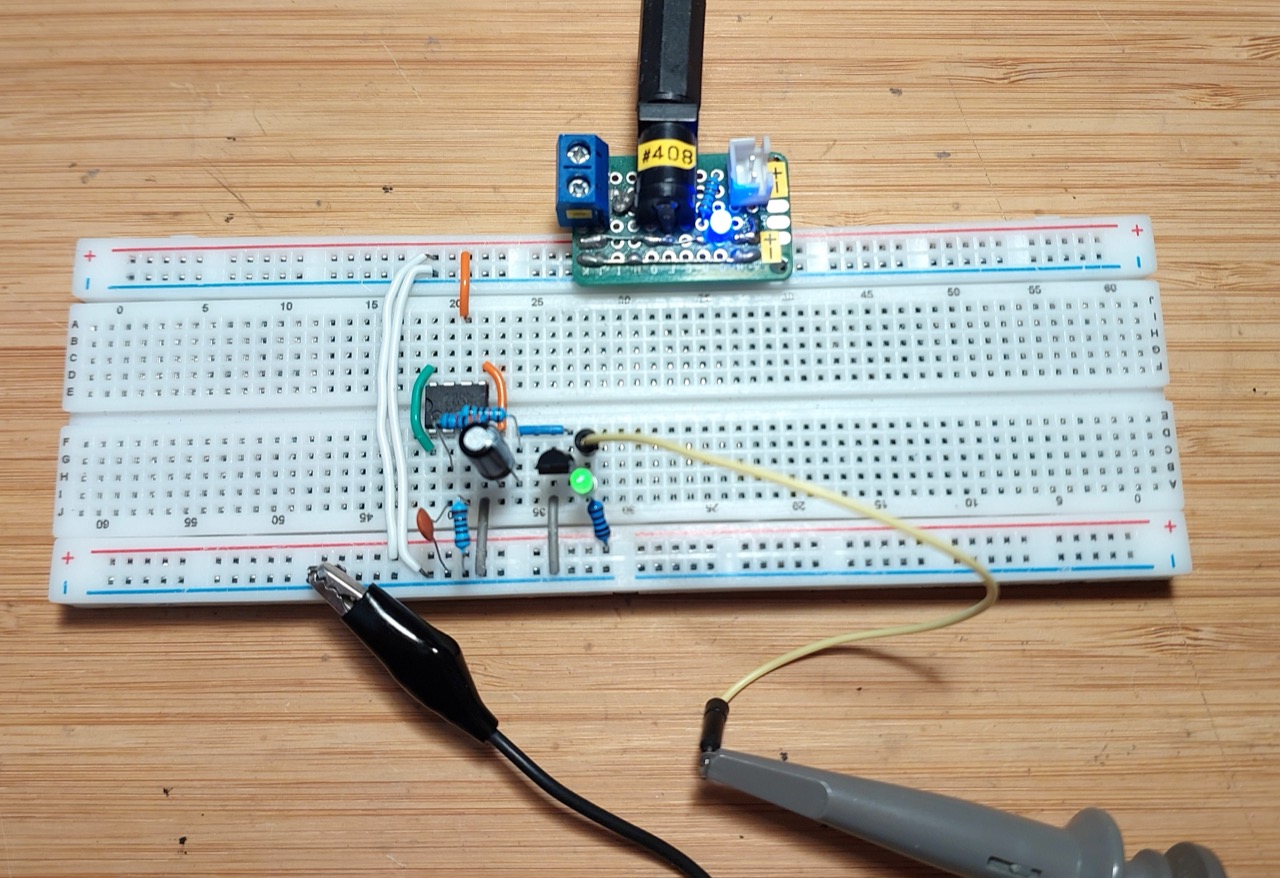
Tested on a breadboard:
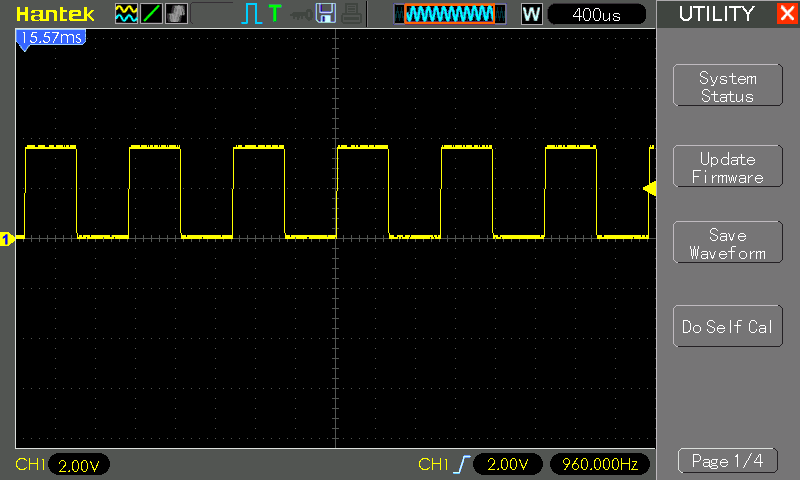
The resulting output, a 960Hz square wave: